Development and Azure Deployment of the BRCL Lab Website
A full-stack lab website for the Bio-inspired Robotics and Controls Lab, developed using ASP.NET Core on .NET 9.0 and deployed on Microsoft Azure with a custom content-management workflow.
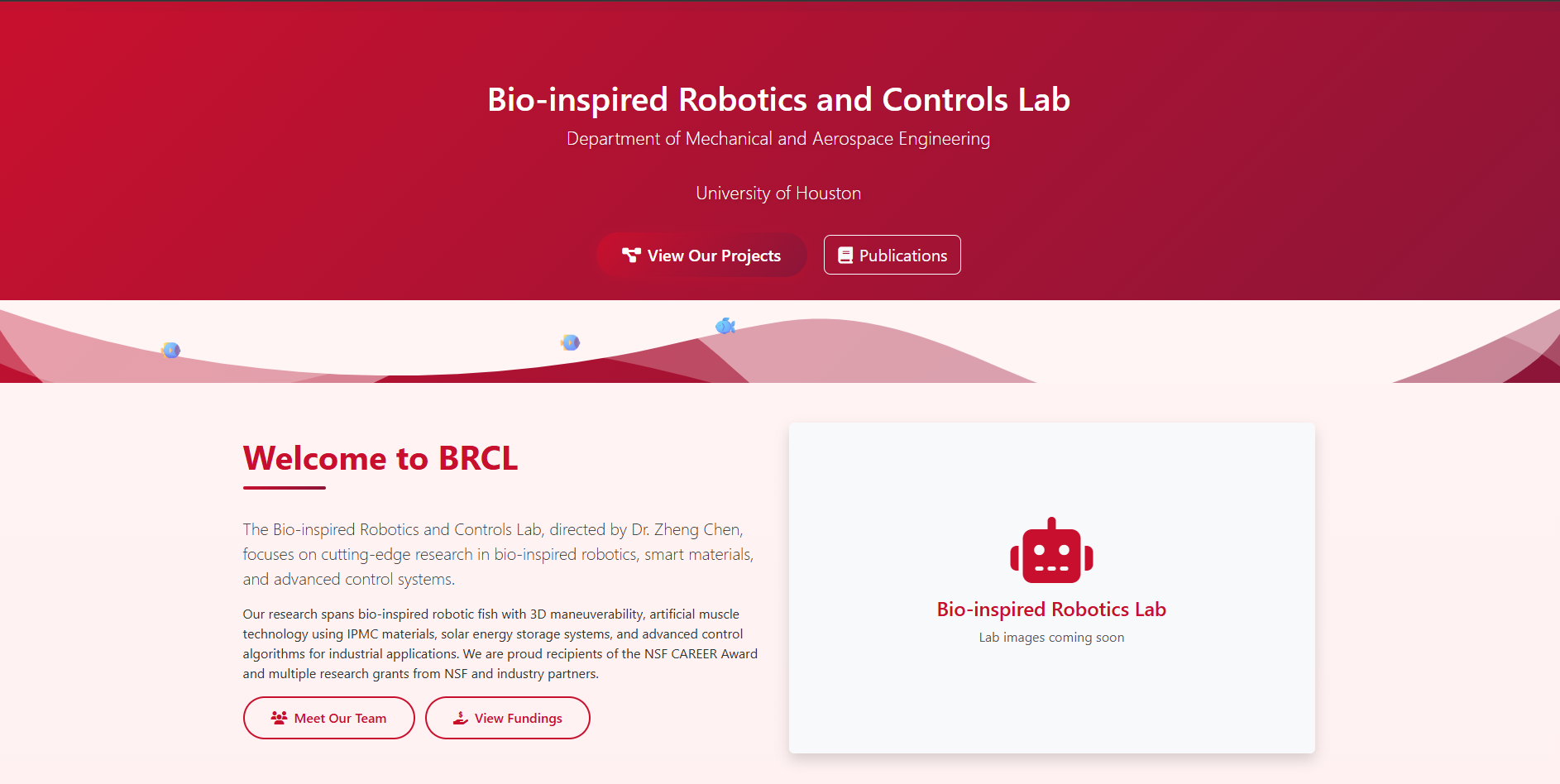
This project focused on the design, development, and deployment of a full-stack website for the Bio-inspired Robotics and Controls Lab at the University of Houston. The website was built to present the lab’s research activities, projects, publications, funding information, team members, and news in a clean and organized format.
The lab, directed by Dr. Zheng Chen, works in areas including bio-inspired robotics, smart materials, robotic fish, soft and hard actuation, and advanced control systems. The goal of this website project was to create a modern online platform that could represent this research work professionally while also making the content easier to update and manage.
Project Motivation
Research labs need more than a static homepage. As projects, publications, team members, and funding information change over time, the website should be easy to maintain without rewriting code for every small update. For this reason, the project was developed as a dynamic web application rather than a simple static website.
The website was designed to support both public visitors and internal content management. Public users can view lab information, research projects, publications, funding details, team profiles, and news updates. On the administrative side, authorized users can manage website content through a dedicated admin workflow.
Technology Stack
The website was developed using ASP.NET Core with .NET 9.0. This provided a structured backend for routing, data handling, authentication-related workflows, and content management. The application was then deployed on Microsoft Azure, allowing the lab website to be hosted as a public web application.
Using ASP.NET Core made the project suitable for a lab website because it supports clean organization of pages, backend logic, database-connected content, and future expansion. The Azure deployment also made the website accessible online without requiring local server management.
Website Design and Public Pages
The homepage was designed with a strong lab identity, using a clean red-themed interface, a navigation bar, and a large hero section introducing the Bio-inspired Robotics and Controls Lab. The main navigation provides access to key sections such as Projects, Fundings, Publications, Team, News, Register, and Login.
The public-facing part of the website was organized around the main types of information a research lab needs to present:
- Research projects
- Funding information
- Publications
- Team members
- Lab news
- General lab introduction
This structure makes the website easier for students, collaborators, sponsors, and visitors to explore the lab’s work.

Admin Panel and Content Management
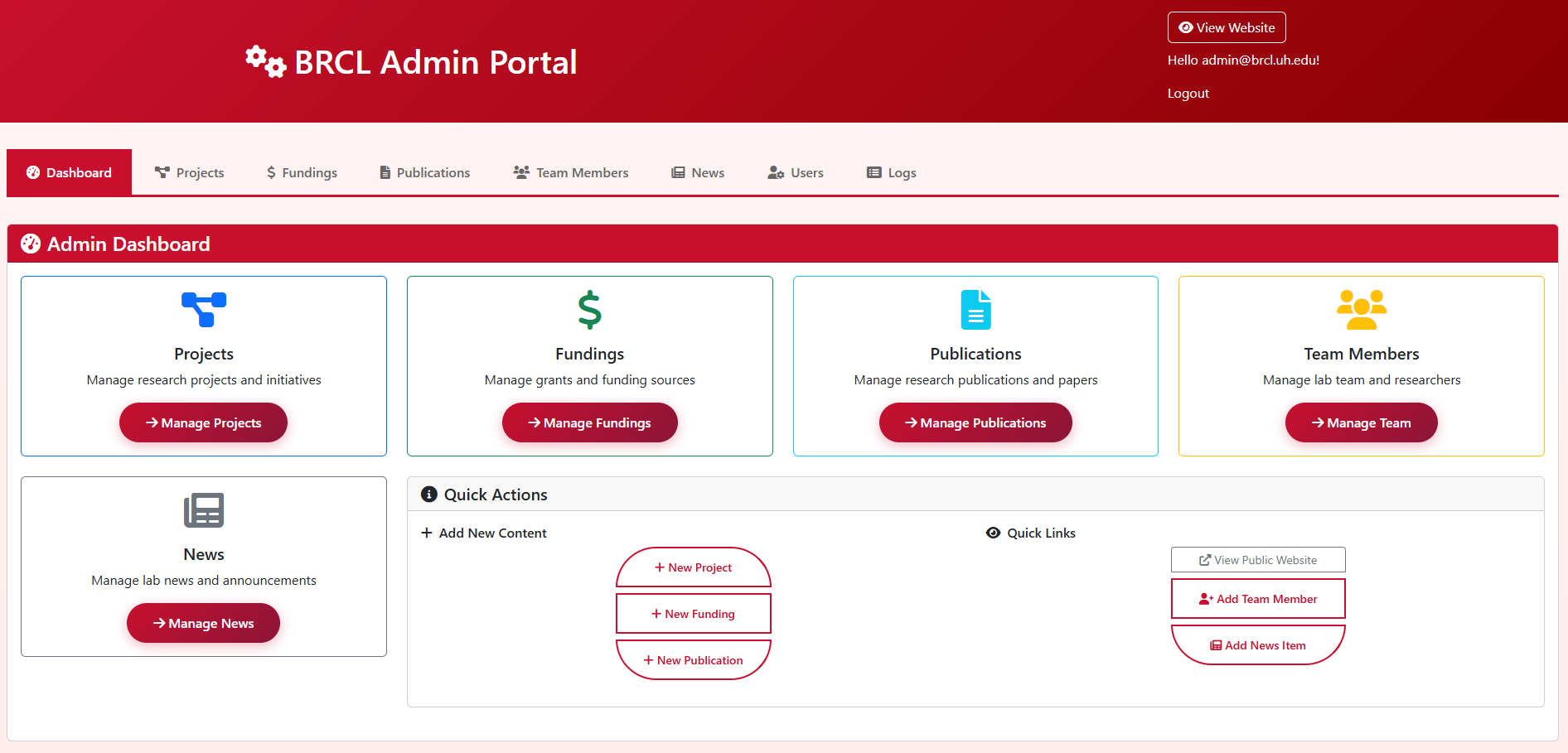
A major part of the project was the admin-side content management system. Instead of manually editing website files each time new information needs to be added, the website includes an admin workflow for managing content directly.
The admin system was prepared to support management of projects, fundings, publications, team members, and news items. This makes the website more practical for long-term use because lab content can be updated as research activities evolve.
This was an important design decision because a lab website should not become outdated simply because updating it is inconvenient. A content-management workflow helps keep the website active and useful.
Azure Deployment
After development, the application was deployed on Microsoft Azure. The deployment process involved preparing the ASP.NET Core application, publishing the project, configuring the hosted web app, and verifying that the public website worked correctly after deployment.
Deploying the site on Azure turned the project from a local development application into a live web platform. This step also required practical testing of routes, page loading, content visibility, login-related pages, and public navigation.
The final deployed version demonstrates the full workflow of building, publishing, and maintaining a real web application using modern Microsoft web technologies.
Why This Project Matters
This project was valuable because it combined software development, web design, backend organization, deployment, and real content-management needs. It was not only about making a visually appealing website, but also about building a practical platform that can support a research lab over time.
For a research group, a well-maintained website helps communicate ongoing work, highlight publications, present funded projects, introduce team members, and support collaboration. It also gives students and visitors a clearer view of the lab’s research direction.
My Contribution
My contribution included developing the lab website using ASP.NET Core on .NET 9.0, organizing the public website structure, supporting the admin-side content-management workflow, preparing the website for deployment, and deploying the application on Microsoft Azure.
The work involved both frontend and backend development, including page structure, navigation, content organization, admin functionality, deployment testing, and live-site verification.
Skills Used
- ASP.NET Core web development
- .NET 9.0 application development
- Full-stack web application design
- Website content management
- Admin panel development
- Azure App Service deployment
- Web routing and page organization
- Research lab website design
- Public-facing academic content presentation
- Deployment testing and live website verification
Outcome
The final result was a deployed lab website for the Bio-inspired Robotics and Controls Lab. The project moved from local ASP.NET Core development to a live Azure-hosted web application with public pages and an admin-side content-management workflow.
This website provides a practical digital platform for presenting the lab’s research, projects, publications, funding information, team members, and news while making future content updates easier to manage.